
From Research to Impact: Public Health 2026 Calls for Public Health and SRHR Papers
The world’s health challenges are no longer confined by borders. Climate change, disease outbreaks, shrinking health budgets, and widening inequalities continue to test the resilience of health systems everywhere. At a time when evidence-based solutions matter more than ever, every research paper has the potential to shape policies, influence programmes, and ultimately improve lives. That is exactly the opportunity the International Conference on Public Health 2026 aims to create.
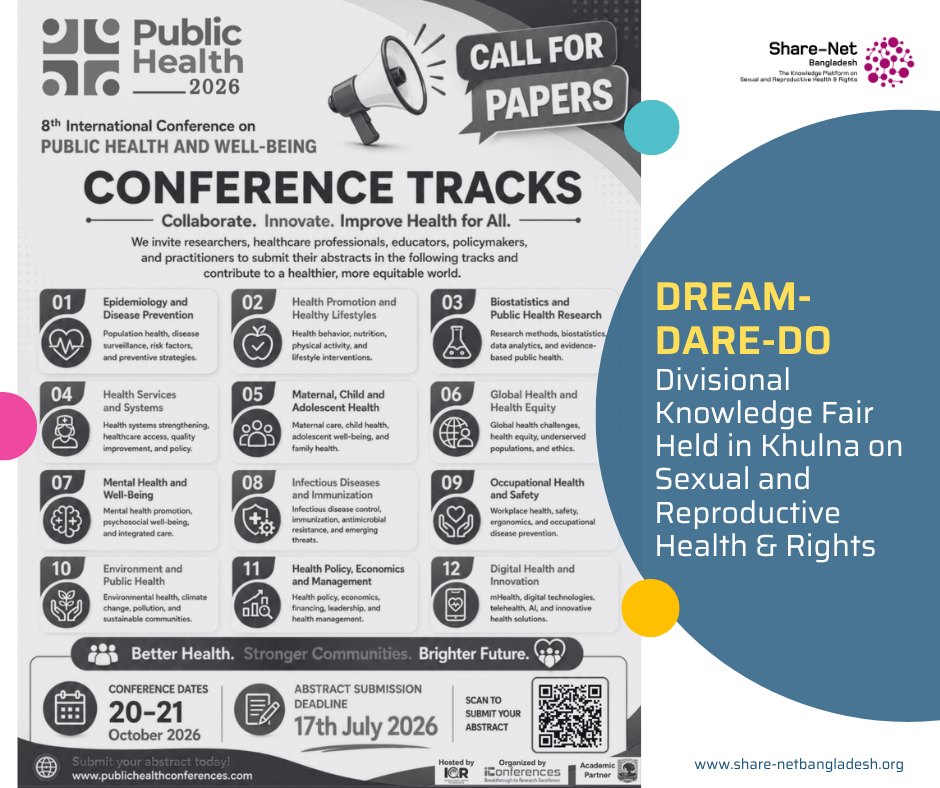
Under the theme “Public Health in a Turbulent World: Building Resilient Health Systems,” the conference has officially opened its Call for Papers, inviting researchers, academics, public health practitioners, policymakers, and students from around the world to share innovative research and practical solutions.
The conference welcomes abstracts between 250 and 300 words, with submissions closing on 17 July 2026. Authors may submit abstracts only or full papers. Accepted submissions will be considered for oral, poster, or virtual presentations following a double-blind peer review process. Selected papers will also receive opportunities for publication in peer-reviewed journals and conference proceedings with DOI support.
Among the nine conference tracks, Maternal, Child and Adolescent Health and Reproductive Health and Rights stand out as particularly relevant for Sexual and Reproductive Health and Rights (SRHR) researchers. Other priority areas include mental health, nutrition, digital health, non-communicable diseases, infectious diseases, climate change, health policy, and community resilience, reflecting the increasingly interconnected nature of global public health.
The timing of this conference is especially significant. According to the World Health Statistics 2026 report, the world remains off track to achieve most health-related Sustainable Development Goals by 2030 despite important gains in several areas. Persistent inequalities in access to health services, maternal care, immunisation, and universal health coverage continue to challenge health systems worldwide. (World Health Organization)
For SRHR researchers from Bangladesh and South Asia, the conference provides an opportunity to contribute evidence on adolescent health, child marriage, maternal health, comprehensive sexuality education, menstrual health, gender equality, and youth participation. These issues remain central to achieving resilient and equitable health systems.
The urgency is clear. A recent global health update warns that 12 million adolescent girls give birth every year, while complications during pregnancy and childbirth remain one of the leading causes of death among girls aged 15 to 19. At the same time, global reductions in development assistance are placing additional pressure on maternal, child, and adolescent health programmes. (PMNCH)
Beyond presenting research, the conference offers something equally valuable: collaboration. Bringing together policymakers, practitioners, researchers, and development partners creates opportunities to transform scientific findings into practical public health action.
